A wrong hire costs more than a salary. It costs the time spent recruiting and training, the work that has to be redone, and sometimes a fraud, a data leak or a safety incident that reaches customers. Background verification is how an employer confirms that a candidate is who they say they are and has done what they say they have done, before that risk becomes real.
This guide explains what BGV is, how the background verification process works in HR, which checks to run for which roles, and what the Digital Personal Data Protection Act now requires of employers. It draws on how verification is run across large-volume hiring in BFSI, retail, telecom and manufacturing.
What is BGV?
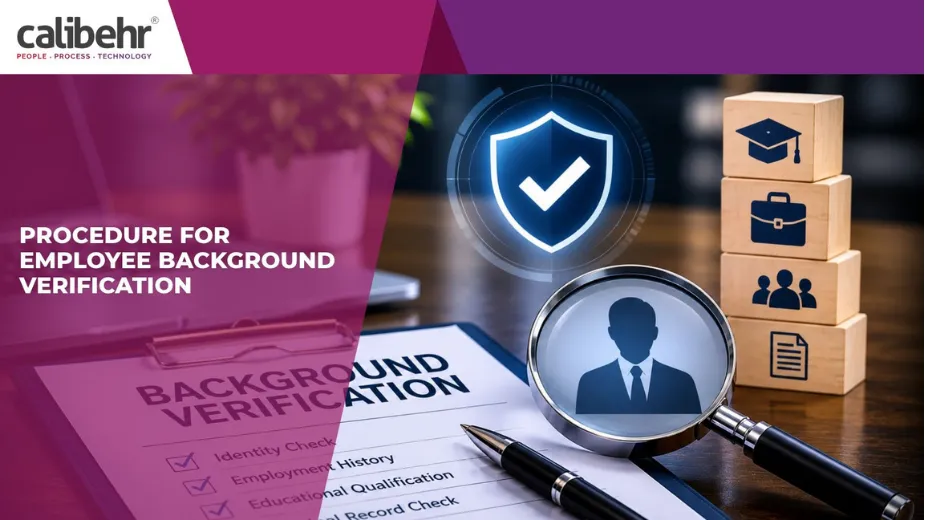
BGV stands for background verification. It is the process of checking the information a candidate provides, such as identity, address, education, previous employment and any criminal record, against independent sources. Employers run BGV before or shortly after a candidate joins, either through an in-house team or through a specialised verification partner.
BGV is not a judgement on a candidate's ability. It answers a narrower question: are the facts in the application true?
Why employee background verification matters
-
Fake documents. Forged degree certificates and experience letters are easy to produce. Without a check at the source, they pass a visual inspection.
-
Dual employment. Since remote work became common, some employees hold two full-time jobs at once. It breaches most employment contracts and creates confidentiality risk.
-
Regulated roles. Banks, insurers, NBFCs and payment companies are expected by their regulators and audit teams to verify staff and outsourced personnel who handle customer data or money.
-
Customer-facing and field roles. Delivery staff, technicians and sales agents enter customers' homes. Address and police verification protect customers and the brand.
The background verification process, step by step
This is the BGV process we recommend for most employers. The sequence matters as much as the checks.
Step 1: Decide the check package by role
Not every role needs every check. A verification policy should define packages, for example a basic package for entry-level roles, an extended package for finance and data-access roles, and an executive package for senior hires. Running every check on every hire wastes money and slows joining.
Step 2: Give notice and take consent
Tell the candidate in clear language what will be checked, why, who will do it, and how long the data will be kept. Record their consent separately from the offer letter. The section on the DPDP Act below explains why this step is now more than a formality.
Step 3: Collect documents and details
Collect identity proof, address proof, education certificates, relieving and experience letters, payslips or a bank statement from the last employer, and contact details for referees. A digital form reduces errors and lets the candidate upload documents directly.
Step 4: Run the checks
The verification team or partner contacts each source: universities and boards, previous employers' HR teams, address field visits or digital address checks, and court record databases. Discrepancies are recorded with evidence, not opinions.
Step 5: Review the report and decide
Most reports grade each check green (verified), amber (minor discrepancy or unable to verify) or red (major discrepancy). HR decides what happens next using the rules in the verification policy, not case-by-case judgement. An amber result on a reference check is not the same as a fake degree.
Step 6: Communicate and close
If the result affects the offer, tell the candidate what was found and give them a chance to explain. Then store the report securely and delete it when the retention period ends.
Which checks are included in BGV?
|
Check |
What is verified |
Typical roles |
|---|---|---|
|
Identity |
Name, date of birth and photo match a government ID |
All |
|
Address |
Current and permanent address, by field visit or digital check |
All, especially field and customer-facing roles |
|
Education |
Degree, institution and year confirmed with the university or board |
Roles where qualification is a requirement |
|
Employment |
Employer, dates, designation and reason for exit confirmed with previous HR |
All experienced hires |
|
UAN / PF history |
Service history from EPFO matches the declared employment |
All experienced hires |
|
Court records |
Civil and criminal cases in court databases |
Finance, senior, regulated roles |
|
Police verification |
Certificate or verification through the local police |
Field, security, home-visit roles |
|
Reference |
Feedback from former managers |
Mid and senior roles |
|
Credit check |
Credit history, with specific consent |
Roles handling cash or credit decisions |
|
Global database |
Sanctions and regulatory watch lists |
BFSI and senior roles |
UAN verification and dual employment
Every employee covered by EPF has a Universal Account Number (UAN). With the candidate's consent, the UAN service history shows which establishments have contributed to their PF account and for which months. It is one of the fastest ways to confirm employment history, because it comes from contribution records rather than from documents the candidate supplies.
UAN verification also exposes two common problems:
-
Gaps or employers missing from the CV. A short stint that ended badly is often left out of an application.
-
Overlapping contributions. PF contributions from two employers for the same months are a strong signal of dual employment. Overlaps can have innocent explanations, such as a delayed exit filing by a previous employer, so confirm with the candidate before drawing a conclusion.
Employees with salaries above the EPF wage ceiling may not have mandatory PF history. The ceiling rose from ₹15,000 to ₹25,000 a month from 17 September 2026, which will widen coverage over time, but for senior hires an employment check with the previous HR team is still needed.
Police verification for employees
Police verification is the check most often requested for drivers, security guards, delivery and field staff, and domestic or home-service workers. Depending on the state, it is done through the state police citizen portal, a police clearance certificate the candidate obtains, or a verification form submitted by the employer to the local police station. Timelines vary from a few days to several weeks by state and district, so start it early for roles where it is mandatory before deployment.
What happens in background verification from the candidate's side?
For candidates, the process usually looks like this: an email or SMS link to a verification form, uploads of documents, a consent declaration, possibly a visit or video call to confirm address, and calls from the verifier to previous employers and referees. Most candidates never hear about BGV again unless a discrepancy comes up. If one does, a reasonable employer will ask for an explanation before deciding.
How long does background verification take?
The answer depends on the checks. Identity, UAN and court record checks can come back in a day or two. Employment and education checks depend on how quickly the previous employer or university responds, and are usually the slowest. A good verification partner reports progress check by check, so HR can make a conditional decision on the completed checks rather than waiting for the last one.
Pre-employment vs post-joining verification
Pre-employment checks happen before the joining date. They are safer, because no employment relationship has started, but they can delay joining in a competitive hiring market. Post-joining checks let the employee start while verification runs, with the offer letter stating that employment depends on satisfactory results. Many employers use a mix: identity, address and UAN before joining; education and references within the first weeks.
BGV and the DPDP Act: what employers must do
The Digital Personal Data Protection Act, 2023 and the DPDP Rules, notified on 13 November 2025, change how verification must be run. The rules are being phased in, with the core obligations on notice, consent, security safeguards, breach reporting and individuals' rights applying from 13 May 2027. Employers running BGV should prepare now:
-
Notice and consent in plain language. Explain what data is collected, for which checks, and for how long it is kept. Some processing for employment can rely on "legitimate use" under the Act, but clear consent for BGV is the safer basis, especially for pre-employment checks on candidates who are not yet employees.
-
A data processing agreement with the vendor. The employer remains responsible for what its verification partner does with candidate data.
-
Collect only what the role needs. A role-based package is also a data minimisation measure.
-
Retention and deletion. Set a retention period for BGV reports and delete them when it ends.
-
Security and breach response. Reports contain identity documents and sensitive details. Restrict access and have a breach response plan.
Common BGV mistakes
-
Using a consent clause buried in the offer letter instead of a separate, specific consent.
-
Running the same check package for every role.
-
Rejecting candidates on an amber result without asking for an explanation.
-
Letting reports sit in shared folders or email inboxes indefinitely.
-
Starting police verification only after the employee has been deployed.
How Calibehr helps
Calibehr's background verification services cover identity, address, education, employment, UAN, court record and police verification for hiring at any volume. Because we also run recruitment process outsourcing and staffing for clients, verification is built into the hiring workflow rather than added after the offer.